The global agricultural landscape is undergoing a profound transformation, driven by the dual pressures of increasing food demand and the imperative for sustainable, efficient production. For Small and Medium-Sized (SME) farms, particularly in emerging markets like Vietnam and established agricultural economies like Korea, this challenge is amplified by labor shortages, disease risk, and volatile market prices. TrackFarm, a South Korean agritech innovator, has positioned itself at the nexus of this challenge, deploying a sophisticated, AI-powered smart livestock farming solution that promises to redefine the operational and economic viability of SME pig farms. This analysis delves into the core technical components of the TrackFarm system, its operational impact, and its strategic market positioning.
I. The DayFarm Platform: A Technical Architecture Overview
TrackFarm’s solution is not a monolithic application but a modular, integrated platform branded as DayFarm. This architecture is strategically designed to address the entire value chain “From Production To Consumption,” a vision that necessitates the seamless integration of software, hardware, and logistics. The DayFarm platform is composed of three primary technical pillars: SW (AI Software), IoT (Sensors/Hardware), and ColdChain (Logistics).
1. SW: Deep Learning and Computer Vision at Scale
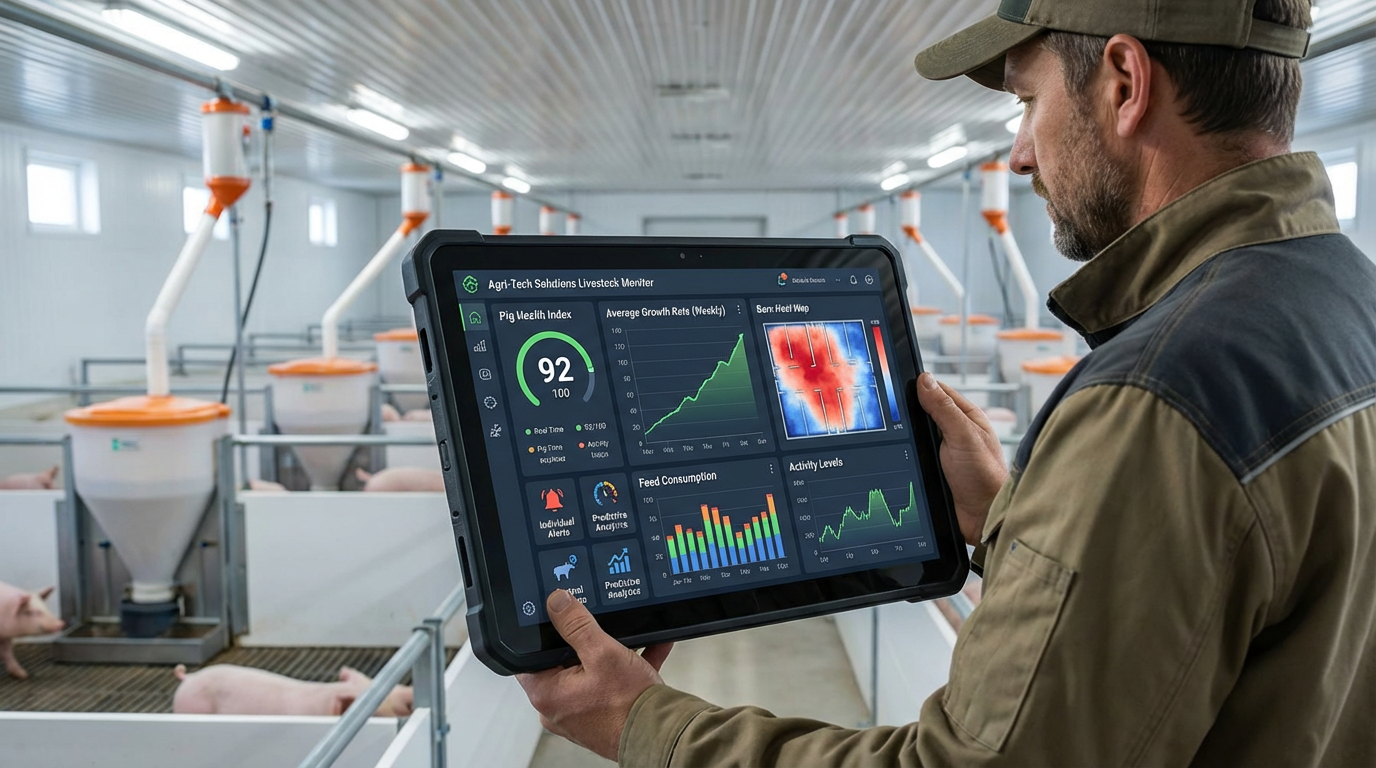
The computational core of DayFarm is its proprietary AI software, which leverages deep learning models trained on extensive, real-world data. The foundation of this intelligence is a dataset of 7,850+ individual pig model data, a significant corpus for training robust computer vision algorithms.
Technical Specifications of the AI Monitoring System:
| Feature | Specification | Technical Impact |
|---|---|---|
| Monitoring Density | 1 AI Camera per 132 m² | High-resolution, comprehensive coverage of large pens. |
| Data Source | RGB Video, Thermal Imaging | Multi-modal data fusion for enhanced accuracy. |
| Core Function | Real-time Pig Identification & Tracking | Enables individual-level monitoring in group housing. |
| Prediction Models | Growth Prediction, Disease Prevention | Proactive management, reducing reactive veterinary costs. |
| Behavioral Analysis | Feeding, Resting, Social Interaction | Early detection of stress or illness indicators. |
The AI camera system is the primary data acquisition layer. Unlike traditional systems that rely on manual observation or simple weight scales, TrackFarm’s approach uses computer vision to continuously monitor every pig. This non-invasive, 24/7 surveillance generates a massive stream of data that is processed by the deep learning models to perform complex tasks:
- Growth Prediction: By analyzing movement patterns, body size changes, and feeding frequency, the AI can predict the optimal slaughter weight and time with high accuracy, optimizing feed conversion ratio (FCR) and market timing.
- Disease Prevention: The system utilizes thermal imaging to detect subtle changes in body temperature, a key early indicator of fever and infectious diseases like African Swine Fever (ASF) or Porcine Reproductive and Respiratory Syndrome (PRRS). Early detection is critical for quarantine and preventing herd-wide outbreaks.
- Stress and Welfare Monitoring: The AI models are trained to recognize abnormal behaviors—such as excessive fighting, lethargy, or changes in posture—that signal poor welfare or impending health issues. This allows for immediate, targeted intervention, improving overall animal welfare and meat quality.
2. IoT: Environmental Control and Data Acquisition
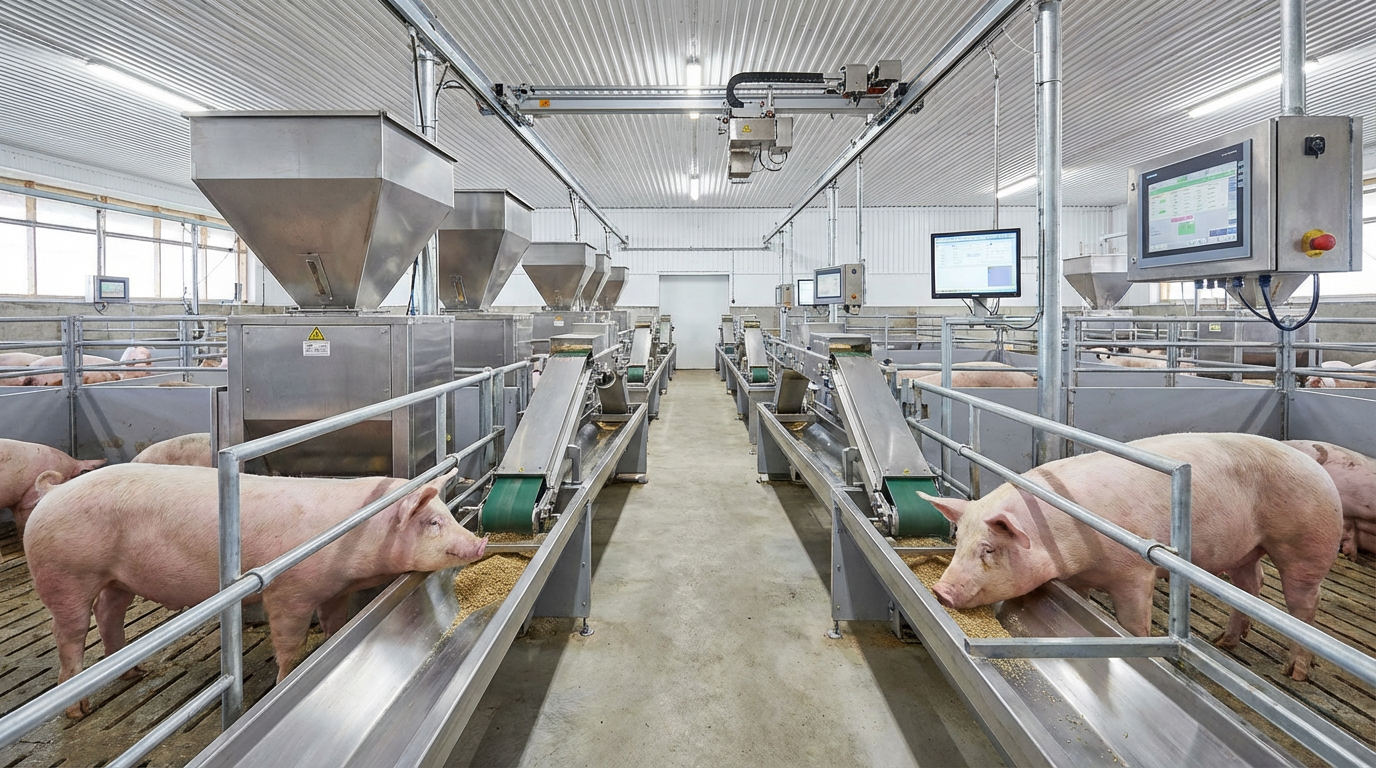
The IoT pillar provides the physical interface between the digital intelligence of the AI and the biological environment of the farm. This network of sensors and actuators ensures optimal environmental conditions and feeds critical, non-visual data back into the AI models.
Key IoT Components and Functions:
| Component | Function | Technical Requirement |
|---|---|---|
| Environmental Sensors | Temperature, Humidity, Ammonia (NH₃), H₂S | High-precision, industrial-grade sensors with low drift. |
| Actuators | Ventilation Fans, Cooling Pads, Feed Dispensers | Robust, remote-controllable hardware for automation. |
| Network Protocol | Low-Power Wide-Area Network (LPWAN) or Wi-Fi Mesh | Reliable data transmission across large, often remote farm sites. |
| Edge Computing | Local processing for real-time alerts and control loops | Minimizes latency for critical environmental adjustments. |
The integration of IoT sensors allows for closed-loop environmental control. For example, if the ammonia level exceeds a predefined threshold, the system automatically adjusts the ventilation rate. This level of automation is the technical mechanism behind TrackFarm’s claim of reducing labor costs by 99%. By automating routine monitoring and environmental adjustments, the need for constant human presence is drastically reduced, allowing SME farm owners to focus on strategic management and high-value tasks.
3. ColdChain: Integration into the Supply Chain
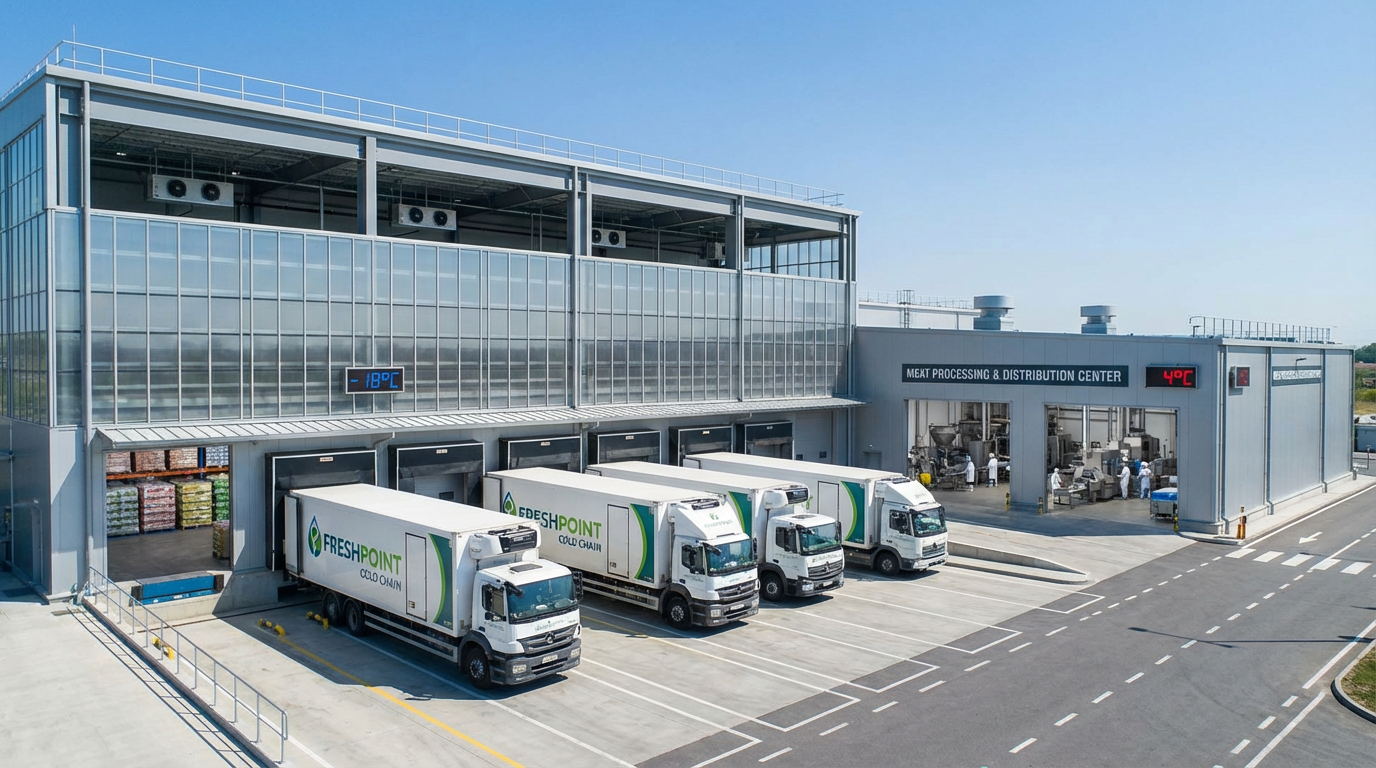
The ColdChain component extends TrackFarm’s technical reach beyond the farm gate. While the core technology is focused on production, the vision of “From Production To Consumption” requires a technical solution for logistics and processing. This involves:
- Data Handover: Seamless transfer of individual pig data (growth history, health records) to processing partners. This data can be used for quality assurance and premium branding.
- Logistics Optimization: Using AI-derived growth predictions to schedule transport and processing slots, minimizing holding times and ensuring a consistent supply of market-ready pigs.
- Processing Efficiency: The revenue model includes a processing fee ($100 per pig), indicating a technical or data-driven partnership with slaughterhouses to optimize their operations based on the quality and volume data provided by DayFarm.
II. Operational Impact on Small and Medium-Sized Farms
The technical sophistication of DayFarm translates directly into tangible operational benefits for SME farms, which typically struggle with capital investment, technical expertise, and scale.
1. Financial Viability and Revenue Model
TrackFarm’s revenue model is structured to be accessible to SME farms, shifting the burden from large upfront capital expenditure to a recurring, performance-based fee.
TrackFarm Revenue Model Breakdown:
| Revenue Stream | Fee Structure | Technical Justification |
|---|---|---|
| HW/SW Subscription | $300 per pig per year | Covers the cost of IoT hardware, AI software license, and maintenance. |
| Breeding Service | $330 per pig | Likely includes data-driven breeding stock selection and management. |
| Processing Service | $100 per pig | Fee for ColdChain integration and data-backed processing optimization. |
The $300 per pig per year model for HW/SW is particularly attractive to SME farms. Instead of a multi-million dollar investment in a custom smart farm build-out, the farm pays an operational expense (OpEx) tied to the number of animals. This lowers the barrier to entry for advanced technology adoption. For a small farm with 2,000 pigs (like TrackFarm’s R&D farm), the annual HW/SW cost would be approximately $600,000, which must be offset by the realized savings and increased yield.
2. Labor Efficiency and Automation
The 99% labor cost reduction is achieved through the comprehensive automation of three key areas:
- Monitoring: AI cameras replace continuous human observation for health and growth checks.
- Environmental Management: IoT sensors and actuators replace manual adjustments of ventilation, temperature, and feeding.
- Data Logging: All data is automatically collected, processed, and reported, eliminating manual record-keeping.
This shift is crucial in markets like Korea and Vietnam, where the agricultural workforce is aging and labor costs are rising. The technology effectively de-skills the routine aspects of farm management, allowing a single technician to manage a significantly larger herd.
III. Market Strategy and Technical Deployment
TrackFarm’s deployment strategy is a testament to its technical adaptability and understanding of diverse agricultural ecosystems. The company operates in two distinct markets: the highly developed Korean market and the rapidly expanding Vietnamese market.
1. The Vietnam Market Opportunity
Vietnam presents a unique technical and market challenge. As the 3rd largest pig market globally with 28 million+ pigs and over 20,000 small farms, it is characterized by high fragmentation and a significant need for modernization.
Vietnam Market Technical Context:
| Metric | Value | Implication for TrackFarm |
|---|---|---|
| Total Pigs | 28 Million+ | Massive potential for scale and data collection. |
| Farm Count | 20,000+ (Small Farms) | High fragmentation requires a low-cost, easily deployable solution. |
| Key Partners | CJ VINA AGRI, VETTECH, INTRACO | Strategic partnerships for local hardware, logistics, and distribution. |
| Deployment Site | Ho Chi Minh Dong Nai (3,000+ pigs) | Proving ground for tropical climate performance and local integration. |
The technical success in Vietnam hinges on the system’s ability to operate reliably in a tropical climate, which stresses both the IoT hardware (heat, humidity) and the biological models (different disease profiles, growth rates). The partnership with CJ VINA AGRI provides a critical logistical and market entry advantage, leveraging an established agricultural supply chain.
2. Global Expansion and Validation
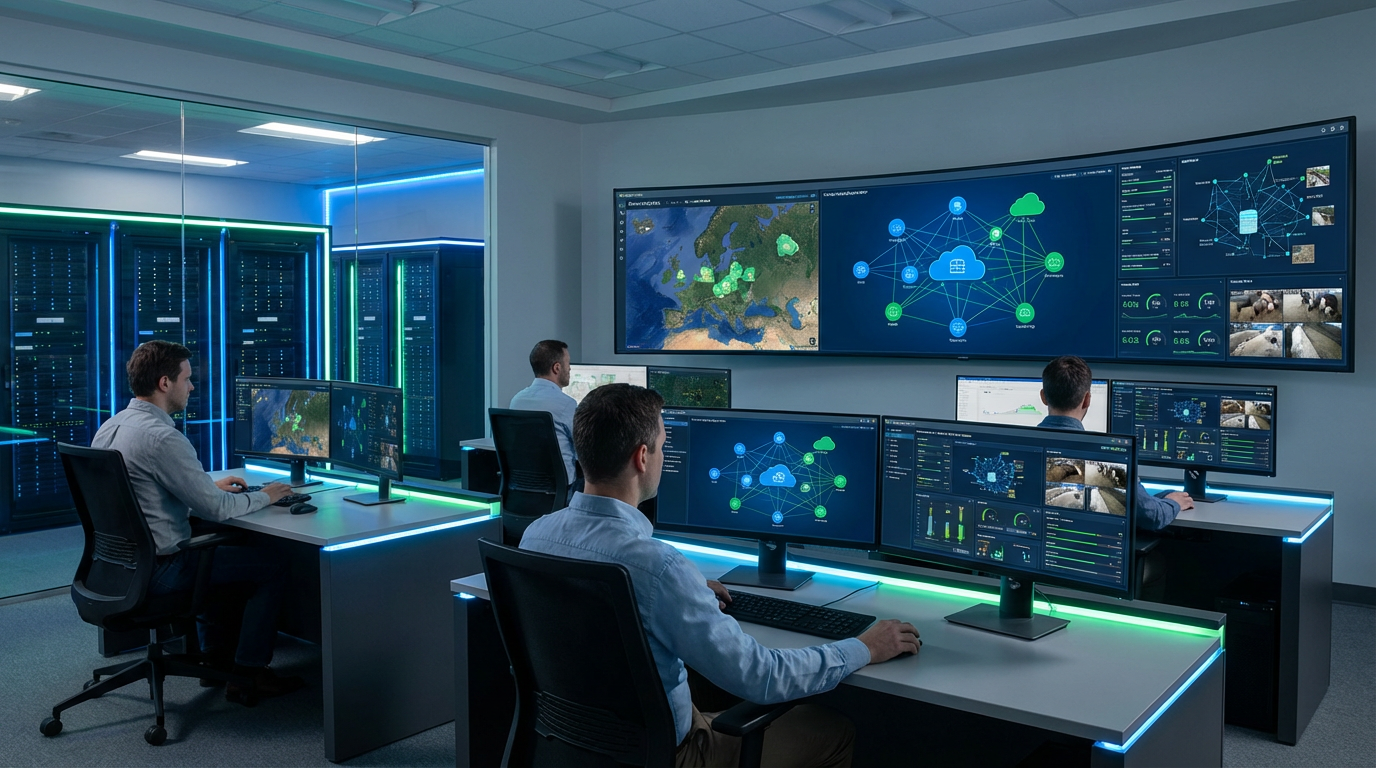
TrackFarm’s participation in major international technology showcases, including CES 2024/2025, and its selection for the prestigious TIPS program 2023 in Korea, serve as technical validation and a platform for global market entry. The target markets—Korea, Vietnam, Southeast Asia, and the USA—require a highly modular and scalable technical solution. The DayFarm platform’s cloud-based SW architecture facilitates rapid deployment and customization for different regulatory and environmental conditions.
IV. Deep Dive into AI and Data Modeling
The true technical differentiation of TrackFarm lies in its AI models. The transition from general computer vision to a highly specialized individual pig model is a complex feat of data science.
1. Individual Pig Modeling and Tracking
The challenge in group housing is the “identity problem.” Traditional systems struggle to track individual animals, making personalized care impossible. TrackFarm solves this by:
- Feature Extraction: The deep learning model extracts unique, persistent features from each pig (e.g., body shape, markings, movement gait).
- Re-identification (Re-ID): Using a Re-ID network, the system maintains the identity of each pig even after temporary occlusions or changes in position.
- Personalized Data Profiles: Each of the 7,850+ pig models contributes to a personalized data profile, which tracks individual FCR, growth curve, health events, and behavioral anomalies. This data is the basis for the $330 per pig breeding and management service.
2. The Role of Thermal Imaging
Thermal imaging is a critical technical component for non-contact health monitoring.
- Fever Detection: A slight increase in body temperature is often the first sign of a systemic infection. Thermal cameras can detect these localized or generalized temperature spikes in real-time, long before a pig shows visible symptoms.
- Environmental Stress: Thermal data also helps in fine-tuning the environment. Hot spots or cold drafts in the pen, invisible to the naked eye, can be identified and corrected, ensuring the pigs remain within their thermoneutral zone for optimal growth.
The fusion of RGB video data (for behavioral and growth analysis) and thermal data (for physiological monitoring) creates a multi-modal data stream that significantly enhances the accuracy and reliability of the AI’s predictions.
V. Technical Challenges and Future Outlook
While the DayFarm platform represents a significant leap in smart farming technology, its long-term success hinges on overcoming several technical and market challenges.
1. Data Generalization and Transfer Learning
The current AI models are trained on data from Korean and Vietnamese farms. Expanding to the US or other Southeast Asian markets requires the models to generalize to new breeds, housing styles, and local disease strains. This will necessitate a robust transfer learning pipeline, where the core models are fine-tuned with minimal local data, a process that must be efficient to maintain the low-cost deployment model.
2. Connectivity and Edge Computing
In many SME farm locations, especially in rural Vietnam or remote areas of Korea, reliable high-speed internet connectivity is a challenge. TrackFarm’s reliance on real-time data processing demands a strong edge computing capability. The IoT devices must be powerful enough to perform initial data processing (e.g., object detection, thermal anomaly flagging) locally before sending compressed, aggregated data to the cloud. This minimizes bandwidth requirements and ensures the system remains operational even during network outages.
3. Integration with Legacy Systems
Many SME farms may have existing, albeit rudimentary, automation or record-keeping systems. TrackFarm must develop flexible API interfaces to integrate DayFarm with these legacy systems, avoiding the need for a complete, costly rip-and-replace scenario.
TrackFarm’s technical foundation—deep learning, multi-modal IoT sensing, and a modular platform—positions it as a powerful enabler for SME farms. By transforming labor-intensive, high-risk pig farming into a data-driven, automated process, the company is not just selling technology; it is selling operational resilience and economic predictability. The successful scaling of the DayFarm platform across diverse international markets will serve as a blueprint for the future of sustainable, technology-enabled livestock production globally. The technical architecture is sound, and the market strategy, particularly the focus on the high-volume, fragmented Vietnamese market, suggests a clear path to becoming a dominant force in the global agritech sector.